

Escolta l’àudio
Listen to the audio

Artist statement below
Kristina Borg
Wombs on Strike*
Transcripció / Transcripción / Transcript
Shh! Shh! Shhhhhh!
Easy… bil-mod, mara, bil-mod, con calma, tranquila
Tarax kbir, tarax iżżejjed, think twice, plan ahead, no vueles tan alto
Lower your sights– Shh! Shh! Shhhhhh!
When are you having children? ¿Para cuándo un nietito? Meta se tbennen?
Le, No– Għax le? If you can, why wouldn’t you?
Għax le– How dare you? ¿Pór que no? ¿Estas loca? Ma tistħix?
Għax le! Porque no!– Don’t worry, you’ll change your mind. La tikber,
taraha differenti, cambiarás de mentalidad– Għax le?
La tikber. Imma torqodx, se te pasa el arroz
Before it’s too late– we freeze your eggs?
Try again, congela tus óvulos! Push, push, harder!
Ippruvajt biżżejjed? Push, push, harder! Push,-ush, shh, shhhh! … push to adopt
Ma tridx tadotta? ¡Adoptá!
Die alone, you
self-centred, selfish bitch– egoísta
Condemned to teenage crudeness– unripe, heartless responsibility
Bla tfal, bla responsabbiltà, tiżvoga fix-xogħol
Jew tibża’, sin coraje, something’s wrong with you, you
horrible person, the reason of evil
Failure of humanity
Malvada, fallaste, falluta
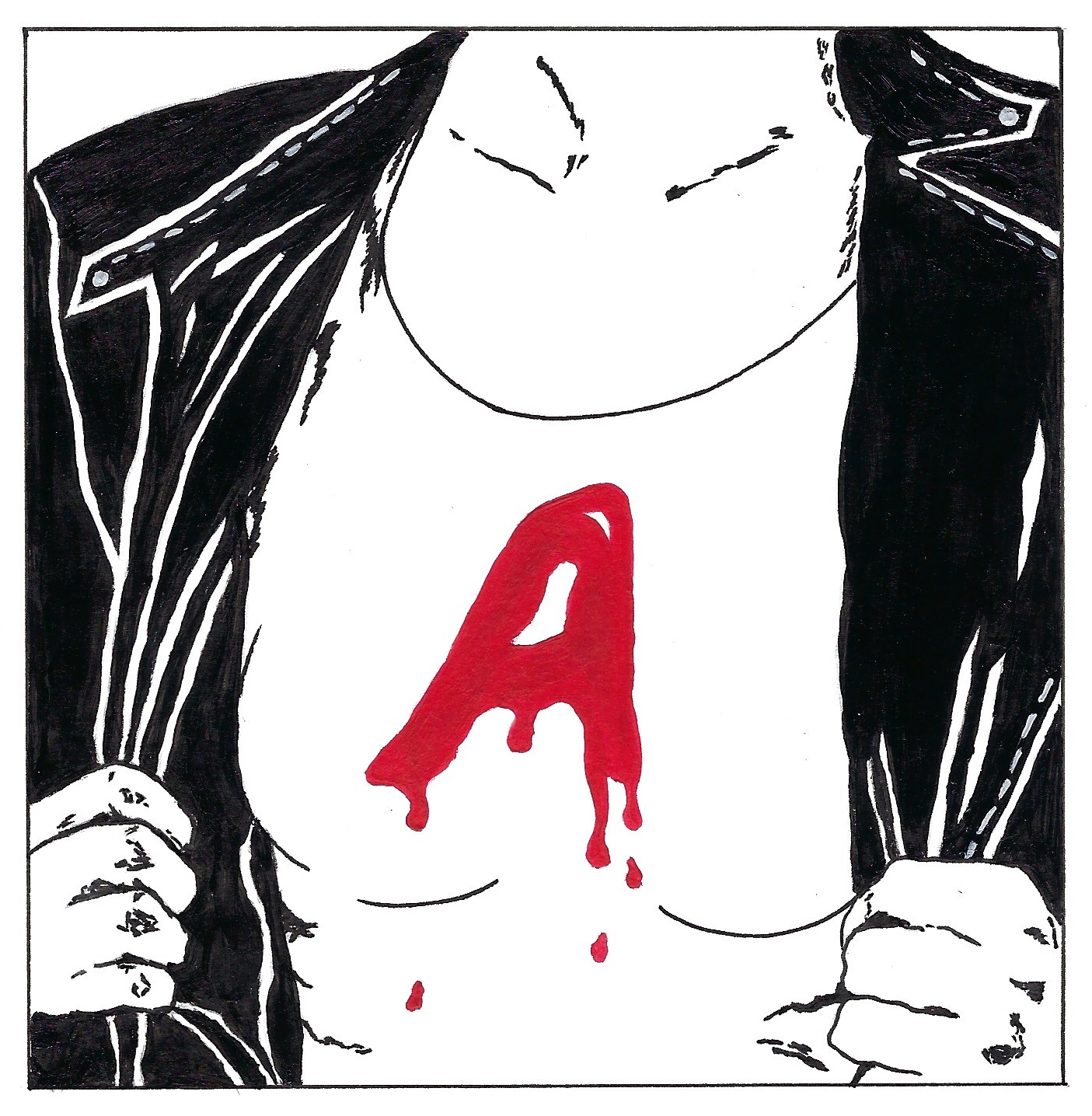
On your breasts, the brand of shame
On my breasts, your brand of shame, I wear a scarlet letter
Escarlata ‘A’– aħmar qawwi, penetranti, skarlat
I wear a scarlet letter
as I work extra hours till late, justify my leave, nibq’ hemm, nibq’ għaddejja
as I choose not to make it to the motherhood pedestal, sin hijos (nonmotherhood),
mal vista, crucified for not following the preordained path
Escarlata ‘A’
as you make me doubt what it could have been like,
tú decides por mí, choose for me, parent me.
How are you more grown up than I am?
Jien min jien? ¿Quién soy yo realmente? The me perceived by all?
Aħmar skarlat inxidd
waqt li naqdef kontra l-kurrent, itektek,
l-arloġġ itektek, el tiempo pasa, el tiempo avanza-tek-tek-tek-tek.
Ageing out the threshold, should I have or should I not?
Doomed by boobs, what is not carried in my womb,
the be-all and end-all of my existence.
Clinically raped through IVF, fulfilling my human function,
I choose not to. Dragged, entrapped into a substitute,
a mother to– my paintings, my students, my books
a mother to– my pets, my juniors, my nephews and nieces.
Contradicción propia– a stupid, constant struggle,
a struggle of self-contradiction.
But, hey what? What the fuck?
I shed away the scarlet letter, month after month,
demmi jbaqbaq, jisplodi, idub u jċarċar.
Escarlata ‘A’ se disuelve, the letter melts, melts, melts-ts-ts-ts
gradually, gradualmente, painfully, dolorosamente,
silently, silenciosamente, softly, suavemente– steadily, constantemente.
I’m free ‘n’ fly high– ¡Vuela!
bil-ġwienaħ imberħa, I travel far and wide
a todas partes, life is fun, flexi
una aventura childfree
Dreams unchained, inlaħħaq ma’ xiex irrid– I’m Able,
almost equated to Mr fellow. I have Agency,
I pause to process, yo pienso, I pause to focus, progress-ss-ss-ss
Eureka! Allow me be my best,
hold space for myself, me abrazo
– an Adult in charge of my life, I choose
what my womb carries, carries, (un)carries, carries, (un)carries
Elijo desprogramarme, deprogramme myself
unfollow the pattern, I seek other
family visions– ta’ erbgħa, ta’ tnejn, waħdi, x’jimporta? I refuse to romanticise
What makes you more of a woman?¿Por qué soy menos mujer?
Why don’t I have children? And you, and you,
you, you, why do you have children?
I choose my dream– selfish, somewhat?
You choose your dream– selfish, somewhat?
I don’t have children, I don’t want to– I don’t, I won’t.
Yes, I’m a mother to– my projects, my pets, my passion,
you call it mother; I call it love– cariño, love works,
bħal rummiena b’demmha jċarċar, juicy
prolific pomegranate, granada abundante
one idea leads to another, fertile barrenness.
My life, mi vida, my choice, mi elección
– consciente, with responsibility.
The world is on fire! The future looks bleak,
Inħobbok, u ma nistax intik dak li ħaqqek, qas siġra?
Tfal m’għandix– m’għandix, ma rridx
No tengo hijos– no tengo, no quiero
Should I have or should I not?
My life, my choice– consciente, with responsibility
Why doubt? Why wonder?
My life, mi vida, my choice, mi elección
My choice, my love, cariño
My love, my life
*In Chollet M. (2023). In Defence of Witches: Why women are still on trial. Picador, p.89.
Wombs on Strike* (‘Úters en vaga’) està inspirat en una sèrie de converses amb vuit dones —quatre nascudes i criades a Malta, quatre nascudes i criades a Espanya, que, d’adultes, han viscut en diversos països, incloent-hi Malta. Totes tenen entre 30 i 45 anys, i han escollit no tenir fills.
Prendre aquest camí, trencar l’estereotip de la dona com a mare, ha estat descrit com un estigma social i considerat un tema tabú. Tal com il·lustra una de les participants, aquesta experiència és anàloga a la de portar posada una lletra escarlata. Igual que la rebel protagonista femenina
de la novel·la de Nathaniel Hawthorne publicada el 1850, La lletra escarlata —a qui es condemna a portar posada una A escarlata, que en el relat significa adulteri—, les dones que comparteixen la seva experiència de triar no tenir fills també se senten acusades de fredor de cor i de tenir una actitud deshonrosa, a més de veure com se’ls nega l’ajuda en comptes d’apreciar les seves habilitats.
Mitjançant l’exploració de la manera com aquest grup de dones s’apropia de les paraules que s’utilitzen per difamar la seva elecció, i converteix la difamació en resistència, s’obre un debat sobre la integració de la diversitat de maneres de viure amb l’esperança d’abraçar la igualtat.
Wombs on Strike* is inspired by a series of conversations with eight women – four born and raised in Malta, four born and raised in Spain, and who as adults lived across countries, including Malta. All aged between 30-45 years old, they have opted not to have children.
Taking such a path, breaking the stereotype of women as mothers, has been described as a social stigma and considered a taboo subject. As one woman illustrated, such experience is akin to wearing a scarlet letter. Just like the rebellious, female protagonist of Nathaniel Hawthorne’s 1850 novel The Scarlet Letter – who is accused and sentenced to wear a scarlet ‘A’, which in the story stands for adultery – the women who shared their experience of the no-child option also feel accused of being dishonourable and heartless, often denied agency rather than appreciated for their abilities.
The work explores how this group of women take hold of the words used to shame their choice and shift such shame into resistance, opening up a discussion towards mainstreaming diverse life choices with the hope of embracing better equality.

 alexia medici